

Introduction
Few literary figures have left as gentle yet lasting an imprint on global culture as Christopher Robin Milne. While millions recognize the name from the beloved Winnie-the-Pooh stories, far fewer understand the complex, deeply human story behind the boy who inspired them. Christopher Robin Milne was not just a fictional character wandering the Hundred Acre Wood—he was a real child whose life became intertwined with one of the most iconic children’s literary franchises in history.
Born into a world of imagination and storytelling, Christopher Robin Milne grew up under the shadow of his father’s success. Yet, as charming as the tales of Pooh, Piglet, and friends may seem, the reality of living as the “real Christopher Robin” was far more complicated. This article explores his life, struggles, legacy, and the enduring fascination with the boy who became a symbol of childhood innocence worldwide.
Early Life: A Childhood Immortalized in Literature
Christopher Robin Milne was born on August 21, 1920, in London, England, to author A. A. Milne and his wife, Daphne Milne. From the very beginning, his life was shaped by privilege, creativity, and public attention. His father, already a successful playwright and writer, would soon transform his son into a literary icon.
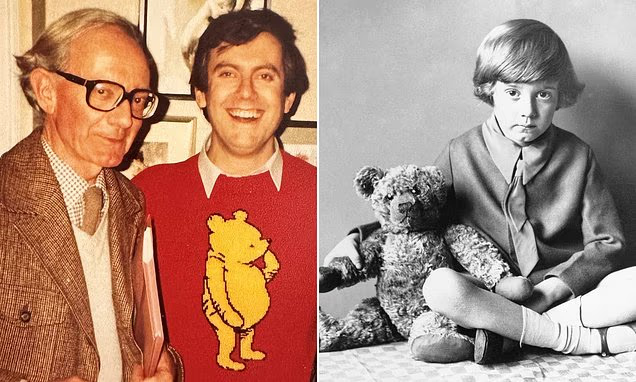
As a young child, Christopher’s toys—including a stuffed bear named Edward—became the inspiration for what would later evolve into Winnie-the-Pooh. The nursery in which he played became the mythical Hundred Acre Wood, and his everyday adventures were reimagined into whimsical tales that captivated readers.
However, this transformation came at a cost. Christopher Robin Milne’s identity became inseparable from the fictional version of himself. While many children dream of being immortalized in books, he would later reflect on how this blurred boundary between reality and fiction created challenges he struggled with throughout his life.
The Birth of Winnie-the-Pooh and Global Fame
The publication of Winnie-the-Pooh in 1926 marked a turning point—not only for A. A. Milne but also for Christopher Robin Milne. The book was an immediate success, followed by The House at Pooh Corner in 1928, further cementing the character’s place in literary history.
Christopher Robin, the character, became a symbol of innocence, kindness, and childhood wonder. Readers around the world fell in love with his gentle leadership and his friendships with Pooh and the other animals. Yet, behind the scenes, the real Christopher Robin Milne was growing increasingly uneasy with the attention.
The fame brought:
- Public recognition at a very young age
- Expectations to embody the fictional persona
- A loss of personal privacy
Instead of enjoying a carefree childhood, Christopher found himself living up to an idealized version of himself that he neither created nor fully embraced.
Education and Struggles with Identity
Christopher Robin Milne attended several boarding schools, including Stowe School, where his literary fame followed him. Unfortunately, rather than admiration, this often resulted in teasing and bullying.
Classmates mocked him for being “the boy from the books,” reciting poems and passages associated with his childhood. This experience deeply affected his self-esteem and sense of identity. He struggled to separate who he truly was from the character the world believed him to be.
In later years, Christopher openly discussed how difficult it was to grow up under such scrutiny. His story highlights a broader issue still relevant today: the challenges faced by children thrust into fame without their consent.
Relationship with A. A. Milne: A Complicated Bond
The relationship between Christopher Robin Milne and his father was layered and, at times, strained. While A. A. Milne undoubtedly loved his son, the success of Winnie-the-Pooh created emotional distance between them.
Christopher later expressed feelings that his father had, in some ways, “exploited” his childhood for literary success. Although this may sound harsh, it reflects the complexity of their dynamic rather than a lack of affection.
Key tensions included:
- The use of Christopher’s real name in published works
- The public’s inability to separate the boy from the character
- Emotional distance caused by fame and expectations
Over time, Christopher sought to reclaim his identity, moving away from the shadow of his father’s creation.
Adult Life: Finding Independence Beyond Pooh
After serving in World War II, Christopher Robin Milne began the long process of building a life independent of his literary past. He married his cousin, Lesley de Sélincourt, and the couple later opened a bookshop in Dartmouth, England.
Running a bookshop may seem ironic given his complicated relationship with literature, but for Christopher, it was a way to engage with books on his own terms. He was no longer just a character—he was a businessman, a husband, and eventually a father.
Despite his efforts, the association with Winnie-the-Pooh never fully faded. Customers and visitors often recognized him, reminding him of a past he tried to leave behind.
Writing His Own Story: Memoirs and Reflections
In adulthood, Christopher Robin Milne turned to writing as a means of reclaiming his narrative. He authored several memoirs, including:
- The Enchanted Places (1974)
- The Path Through the Trees (1979)
- The Hollow on the Hill (1982)
These works offered candid insights into his life, revealing the emotional complexities behind his childhood fame. Rather than rejecting Winnie-the-Pooh entirely, he sought to provide context and understanding.
Through his writing, Christopher emerged not just as a subject of literature but as a thoughtful voice reflecting on identity, fame, and personal growth.
Personal Life and Family Challenges
Christopher Robin Milne’s personal life was not without its difficulties. His marriage to Lesley, while lasting, faced challenges, including family tensions. Notably, his relationship with his mother, Daphne, became strained and distant over the years.
Additionally, his daughter, Clare Milne, was born with cerebral palsy, which brought both joy and hardship to the family. Christopher was deeply devoted to her, and her condition influenced his perspective on life, resilience, and compassion.
These personal experiences shaped his later writings and added depth to his reflections on what it means to live authentically.
Cultural Impact and Enduring Legacy
Despite his complicated feelings, Christopher Robin Milne remains an essential part of literary history. The character inspired by him continues to resonate with audiences worldwide, symbolizing:
- Childhood innocence
- Friendship and kindness
- The magic of imagination
The Winnie-the-Pooh franchise has expanded far beyond its original books, influencing films, merchandise, and global pop culture. Yet, the real Christopher Robin Milne serves as a reminder that behind every story lies a human experience.
His legacy is twofold:
- As the inspiration for a timeless character
- As a voice highlighting the realities of growing up in the public eye
Interesting Facts About Christopher Robin Milne
Here are some lesser-known details that add depth to his story:
- His original teddy bear, Winnie-the-Pooh, is now housed in the New York Public Library
- He rarely revisited the Pooh stories in his adult life
- He preferred to be known simply as “Christopher Milne”
- His memoirs were critically acclaimed for their honesty and introspection
- He lived a relatively quiet life despite global recognition
These details reveal a man who sought normalcy in a life that was anything but ordinary.
Public Image: Between Fiction and Reality
The public perception of Christopher Robin Milne has often been shaped by nostalgia. For many, he represents an idealized version of childhood—gentle, imaginative, and carefree.
However, his real-life story challenges this perception. It reveals the emotional complexities of being turned into a symbol before having the chance to define oneself.
Today, there is growing appreciation for his honesty and willingness to share his experiences. His story resonates in an age where childhood fame—through media, entertainment, and social platforms—remains a pressing issue.
Conclusion
The life of Christopher Robin Milne is a compelling blend of literary magic and human reality. While the world remembers him as the boy who played with Pooh in the Hundred Acre Wood, his true story is far richer and more nuanced. From a childhood immortalized in books to an adulthood spent reclaiming his identity, Christopher’s journey offers valuable insights into fame, family, and self-discovery.
Understanding Christopher Robin Milne means looking beyond the charming illustrations and whimsical tales. It means recognizing the real person behind the legend—a man who navigated the challenges of being both a character and an individual.
His legacy endures not just through Winnie-the-Pooh, but through his own words and reflections. In that sense, Christopher Robin Milne remains not only a figure of literary history but also a deeply human voice worth remembering.
FAQs
1. Who was Christopher Robin Milne?
Christopher Robin Milne was the son of author A. A. Milne and the real-life inspiration for the character Christopher Robin in the Winnie-the-Pooh books.
2. Did Christopher Robin Milne like being famous?
No, he often found the fame uncomfortable and struggled with being associated with a fictional version of himself.
3. What did Christopher Robin Milne do as an adult?
He served in World War II, became a bookseller, and wrote memoirs reflecting on his life and experiences.
4. What are Christopher Robin Milne’s memoirs?
His memoirs include The Enchanted Places, The Path Through the Trees, and The Hollow on the Hill.
5. What is Christopher Robin Milne’s legacy?
His legacy lies in both inspiring a beloved literary character and sharing a powerful, honest account of growing up in the shadow of fame.
You may also read: Celebrity Bio

