

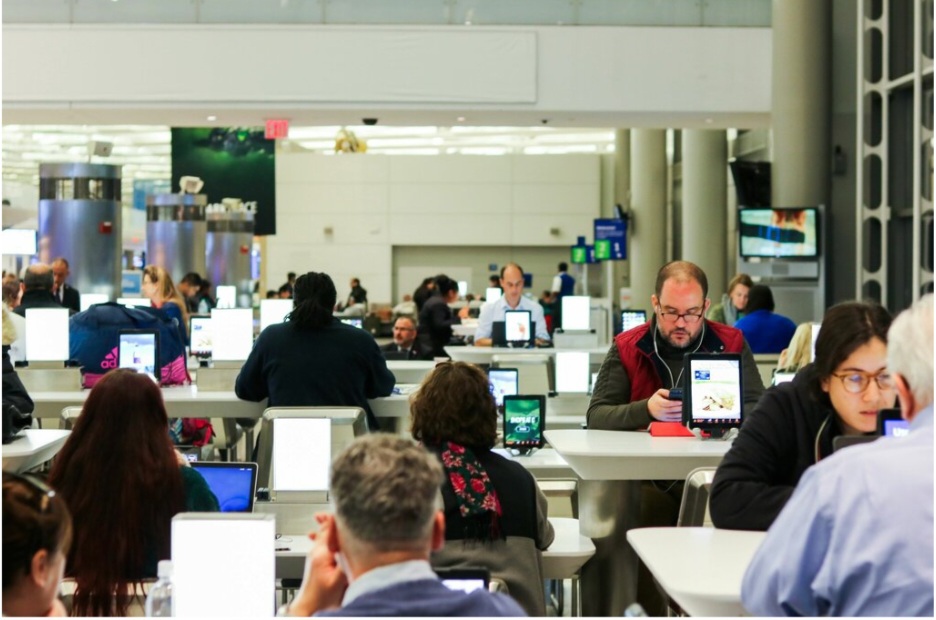
Every awards season now seems to come with a defining image. Zendaya’s robot-inspired suit at the Dune: Part Two London premiere, a surprise relationship debut on a Leicester Square red carpet, or a tearful close-up from the Glamour Women of the Year awards will ricochet across X, Instagram and news homepages within minutes. HELLO! and other UK titles know that being first is not enough. The winning picture has to be instantly legible on a phone, dramatic at thumbnail size and strong enough to carry a front page in print.
That visual race happens at dizzying scale. One recent industry analysis estimated that people worldwide now take more than 5 billion photos every day, with smartphones responsible for around 94 per cent of them. Red carpets are a concentrated version of that flood: multiple photographers firing bursts as a celebrity turns their head or adjusts a dress. Somewhere inside that chaos is the one frame a picture editor will pick, crop and tweak for millions of readers.
Why viral celebrity shots still matter to newsrooms
Newsrooms may complain about dwindling print sales, but for showbiz desks a strong picture still sets the news agenda. Ofcom’s 2024 News Consumption in the UK report found that 71 per cent of UK adults now access news online, with more than half saying they use social media as a news source. The Reuters Institute’s Digital News Report adds that the majority of online news video is now watched on third-party platforms rather than publisher sites, reinforcing the idea that the first encounter with a story is often a tiny preview image in a scrolling feed.
At the same time, mobile phones have overtaken television as the screen people spend the most time with. The Institute of Practitioners in Advertising’s 2025 TouchPoints survey showed British adults averaging 3 hours 21 minutes a day on mobiles, slightly more than on traditional TV. When audiences graze headlines in odd moments, the celebrity face that stops the thumb is effectively doing the job that a bold poster or billboard used to do.
In that environment, the red-carpet shot is not just decoration. It is a hook for a wider story about a divorce, a comeback, a political cause pinned to a lapel, or a cultural moment people want to feel part of. Editors talk about asking one simple question when they look at a contact sheet: if this image flashed past you for half a second between messages and memes, would you tap?
- A striking image gives a story a better chance of surfacing in social and search algorithms.
- It helps brands like HELLO! signal their tone: celebratory, glamorous, sometimes playful.
- A single frame can summarise a complex narrative, from a break-up to a surprise reunion, in one glance.
Key point
In a mobile-first news cycle, the celebrity photo is no longer an illustration for the story; it is often the story’s entry ticket to the audience.
From red carpet to picture desk: choosing one frame out of hundreds
The journey from pap shot to front page starts long before an editor touches a crop tool. At a big London premiere, wire agency photographers will lock onto the arrivals line and shoot in short bursts as each celebrity pauses. A single step-and-repeat moment can generate dozens of near-identical frames: eyes half-closed in one, hair mid-flick in the next, a perfect expression three frames later. Those images are transmitted in real time over mobile data or venue Wi-Fi to the agencies’ servers.
Back in the newsroom, the photo desk sees those frames arrive as a live feed inside a digital asset system. Editors scan them in grid view, first rejecting anything obviously unusable: focus missed, lens flare, other photographers intruding. Then they start a more subjective selection based on story sense. A joyful pose might suit a feel-good feature, while a slightly awkward expression could better accompany a piece about backstage tensions or online backlash.
Volume is a constant challenge. Industry analyses suggest that in 2024 humanity took roughly 1.9 trillion photos, about 5.3 billion per day, and that number continues to rise. Red carpets and royal walkabouts may represent only a tiny slice of that, but from the editor’s perspective the effect is similar: an overwhelming flow that must be narrowed to one image that will stand in for an entire event. That is why picture desks now talk about working more like data triage teams, skimming, rating and filtering at speed.
In this first pass, editors also think ahead to how easily they will be able to crop image options for different uses. A frame with clean space around the subject gives them flexibility for print, homepage and social media versions. Tight framing can be dramatic, but if a hand, microphone or security barrier is already close to the edge, it may be impossible to adapt later without losing important detail.
Key point
Before any retouching happens, the crucial editorial decision is which single frame can carry multiple versions of the same story across print, web and social.
Cropping, colour and blur: how images are tuned for tiny screens
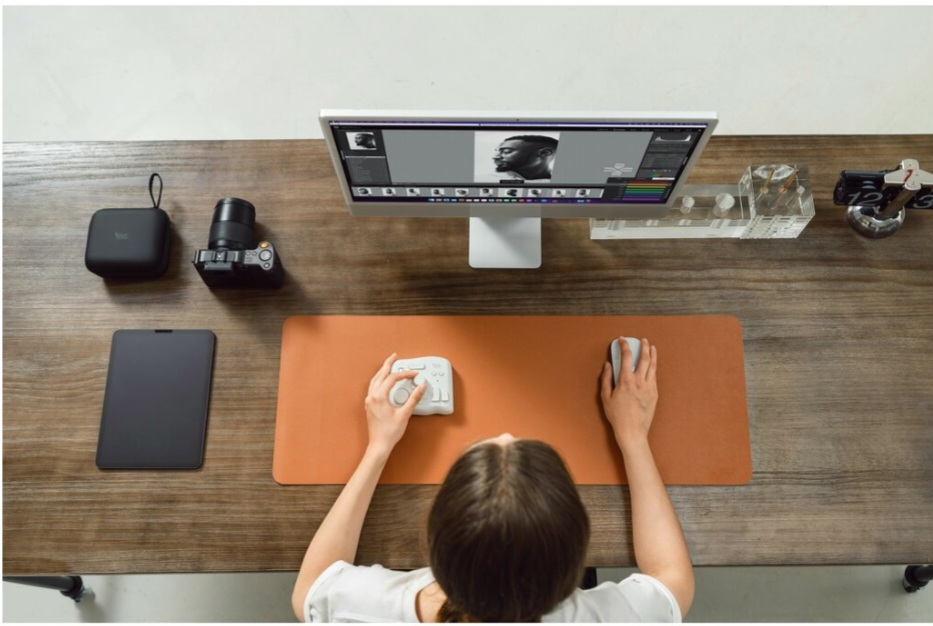
Once a shortlist is chosen, the desk moves into what picture editors sometimes call the “digital darkroom”. The basic toolkit is simple: crop, exposure, contrast, colour balance and occasionally a subtle background blur. The goal is not to transform the scene beyond recognition, but to emphasise what a reader should notice first. In a busy premiere shot, that usually means the face and gesture, not the corporate logos on the backdrop or another star half-visible in the corner.
Cropping is where much of the drama comes from. A full-length gown on the red carpet may look magnificent in print, but on a phone the same frame can turn into a small beige blob. A good editor will crop image files so the celebrity’s face and hand movements fill more of the frame, often nudging the eyes towards the upper third of the composition. This respects basic principles from visual psychology, which show that humans are drawn first to faces and areas of high contrast.
Behind the scenes, there are informal rules that guide these micro-adjustments. Picture desks are trained to crop image organically around the expression, not the outfit, so the emotion reads even on a tiny mobile screen. That is why, at a glance, you can often tell whether a story is celebratory, shocked or furious without reading a single word. In the grid of a news app, an open-mouthed laugh or a side-eye across a crowded room conveys tone faster than any headline.
Background blur is used more selectively. Many red-carpet photographers already shoot with a shallow depth of field, which throws advertising hoardings and other guests softly out of focus. When software blur is added later, reputable outlets try to keep it gentle, avoiding the cut-out look associated with portrait modes pushed too far. The aim is to separate subject from noise, not to pretend that bystanders or photographers were never there.
Colour work is usually minimal but important. Editors will correct white balance so skin tones look plausible under mixed lighting, lift shadows to reveal details in hair and fabric, and sometimes tone down overly saturated reds or blues that can bleed on older screens. They may also prepare slightly different versions for print and digital, since CMYK inks and backlit pixels handle contrast in very different ways.
Key point
The most effective celebrity news images are not wildly retouched; they are carefully framed and tuned so that people, not logos or clutter, dominate the split-second impression on a phone.
Ethics, speed and the invisible line between edit and manipulation
If these edits sound subtle, that is deliberate. Most mainstream UK newsrooms work within written guidelines and industry codes that distinguish acceptable tonal corrections from misleading manipulation. Tweaking exposure, cropping in and removing sensor dust are considered routine. Adding or deleting people, altering body shape or compositing elements from different frames crosses into territory that usually demands a clear label or is banned outright.
Trust is fragile in this area. The Reuters Institute’s 2025 Digital News Report notes that trust in news remains low in many countries, with audiences wary of both partisan framing and visual fakery. That scepticism has been sharpened by the rise of AI image generators, which can produce convincing fake photos of celebrities in seconds. Picture desks therefore find themselves not only editing quickly, but also checking source authenticity, agency metadata and, increasingly, whether a “photo” may in fact be synthetic.
At the same time, commercial and editorial pressures favour ever more eye-catching images. When metrics show exactly how many people tapped on one crop of a royal couple compared with another, it is tempting to push closer and closer in search of the most intense expression. Some editors worry that this arms race in emotion risks distorting how we see public figures, privileging fleeting micro-expressions over context or nuance.
- Fast editing workflows need clear internal rules about what is acceptable and what must be labelled.
- Training now includes both aesthetic judgment and basic forensic skills, such as checking for AI artefacts.
- Celebrities and their teams increasingly monitor how images are used, challenging outlets they feel have crossed a line.
Key point
The same techniques that make celebrity photos compelling at thumbnail size can also erode trust if they drift from clarification into distortion, which is why newsroom rules and transparency matter.
In practice, the line is policed through habit as much as formal policy. Editors learn, often from older colleagues, that darkening a background or trimming a distracting elbow is fine, while slimming a waist or erasing a bystander is not. The speed at which they work – sometimes turning a full set of images around during a live awards show – leaves little time for philosophical debate. Yet every small decision contributes to the composite mental picture audiences build of famous people and events.
For readers, the takeaway is not that red-carpet images are fake, but that they are carefully constructed. One pap might have caught a celebrity mid-blink; another captured the same moment as an elegant eye-roll. The version that lands on your homepage has passed through the tastes, tools and time pressures of a particular newsroom. Understanding that process can make us both more appreciative of good editorial craft and more questioning of the moments we are invited to obsess over.
FAQ
Do newsrooms still use the original paparazzi shot without changes?
Occasionally, yes. If a frame arrives perfectly exposed and composed, it may run with only minimal adjustments. More often, editors apply small crops and tonal tweaks so the image reads clearly on different platforms.
How many photos does a picture editor look at for a single event?
For a major premiere or awards night, a UK picture desk might see hundreds of frames from multiple agencies. Editors scan them quickly in grid view, shortlist a handful, then work more carefully on one or two lead images.
Are celebrity photos on news sites heavily airbrushed?
For reputable outlets, no. Standard practice is to adjust exposure, contrast and colour, not to change body shape or remove significant elements. Heavier retouching is more common in fashion or advertising campaigns than in straight news coverage.
Why do some red-carpet pictures feel more dramatic online than in print?
Digital versions are often cropped tighter and optimised for bright screens, which can make expressions and fabrics pop more. Print images must allow for ink limits and paper quality, so they may look slightly flatter but hold more detail overall.
Can readers tell when an image has been edited too far?
Often they can. Over-smoothed skin, harsh blur and strange lighting are common clues. As audiences become more visually literate, outlets risk backlash and loss of trust if they push edits beyond what feels like a faithful record of the event.

